Farmer Field School approach strengthens biosecurity, promotes responsible antimicrobial use, and supports Ghana’s National Action Plan on AMR
Ghana has marked a significant milestone in the fight against antimicrobial resistance (AMR) with the graduation of 210 Farmer Field School (FFS) Participants and 14 Facilitators under the Fleming Fund Phase III Project. The initiative is implemented by the Food and Agriculture Organization of the United Nations (FAO) in collaboration with the Ministry of Food and Agriculture and the Veterinary Services Directorate (VSD).
Between 2023 and 2025, the graduates completed a comprehensive 25-week FFS cycle across seven districts in the Western, Bono, and Bono East Regions. Using a participatory and hands-on learning approach, farmers strengthened farm biosecurity, improved responsible antimicrobial use (AMU), and generated farm-level data to inform national AMR policy and action.
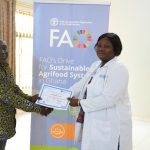
The graduation ceremony formally recognized the commitment and achievements of both farmers and facilitators, underscoring their role as change agents in promoting disease prevention and reducing reliance on routine antibiotic use in poultry production.
“Reducing the need for antimicrobials in poultry production is essential to protecting animal health, public health, and the sustainability of Ghana’s agrifood systems. The Farmer Field School approach empowers farmers with practical skills to prevent disease and use antimicrobials responsibly under a One Health framework,” said Dr. Emmanuel Allegye-Cudjoe, Chief Veterinary Officer.
“Antimicrobial resistance is a shared responsibility. By strengthening farmer knowledge, advisory services, and coordination across the value chain, we are supporting long-term, sustainable solutions that safeguard food safety and public health while protecting farmers’ livelihoods,” said Priya Gujadhur, FAO Representative in Ghana, in an address read on her behalf.
Beyond formal recognition, the event served as a platform for sharing experience among farmers, extension officers, and national stakeholders, reinforcing linkages between farm-level practices and national AMR priorities.
The FFS approach has demonstrated that prevention, through improved housing, enhanced biosecurity, and stronger advisory support, can significantly reduce dependence on antimicrobials. As Ghana continues implementing its National Action Plan on AMR, the initiative contributes to building resilient animal health systems and advancing responsible antimicrobial use across the poultry sector.
Source: FAO