The Canoe and Fishing Gear Owners Association of Ghana (CaFGOAG) has defended the expansion of Ghana’s Inshore Exclusion Zone (IEZ) from six to 12 nautical miles, describing it as a lawful exercise of sovereignty.
According to the CaFGOAG, the expansion was aimed at protecting fish stocks, food security, and the livelihoods of millions of artisanal fishers.
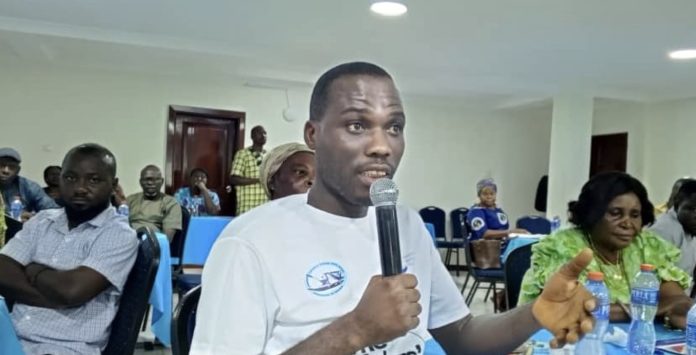
In a statement responding to concerns raised by some industry players, Nana Kweigyah, th President of the CaFGOAG, said claims that the Fisheries and Aquaculture Act, 2025, was unlawful or economically reckless misrepresented both the law and the intent of the reform.

He stated that the central issue before the country was not the adjustment challenges faced by a small number of industrial vessels but whether Ghana’s small pelagic fish stocks, which support millions of livelihoods, would avoid collapse.
According to him, the artisanal fisheries sector remained the dominant sub-sector in terms of fleet, production, and employment, with more than 110,000 fishermen operating over 12,000 canoes across 279 landing sites, adding that the number of canoes had since increased to over 14,000.
He argued that if fish stocks collapsed, the employment and food security consequences would be national and irreversible.
On the legality of the IEZ expansion, Nana Kweigyah explained that Ghana’s sovereignty was strongest within its 12 nautical mile territorial sea under the United Nations Convention on the Law of the Sea (UNCLOS) and that the state had full authority to regulate fishing activities within that zone.
He stated that expanding the IEZ was therefore not a surrender of sovereignty but a direct exercise of sovereign authority to manage marine resources in the national interest.
Addressing claims that Ghana-flagged industrial vessels had been “ostracised”, he said flag state responsibility under international law required compliance with national regulations and did not confer automatic commercial rights to fish in specific zones.
He noted that the 12 nautical mile IEZ represented only about six per cent of Ghana’s 200 nautical mile Exclusive Economic Zone (EEZ), leaving approximately 94 per cent accessible to industrial vessels using permitted gear.
The association further rejected assertions that a 5–6 nautical mile IEZ was standard practice in West Africa, stating that countries such as The Gambia, Guinea-Bissau and São Tomé and Príncipe had already adopted 12 nautical mile IEZs, with others considering expansion.
Nana Kweigyah argued that Ghana faced intense pressure from distant water fishing vessels, with studies indicating that a significant number of such vessels operating under flags of convenience were registered in African states, including Ghana.
He said this situation had subjected Ghana’s fish stocks to severe exploitation, including repeated incursions of industrial trawlers into inshore waters.
The association also dismissed suggestions that restricting industrial fishing nearshore would increase fish imports, stating that the real threat to food security was stock depletion and collapse caused by overfishing.
He explained that protecting inshore waters would rather secure long-term domestic supply by allowing small pelagic species such as sardinella and mackerel to recover.
Nana Kweigyah further highlighted the negative impact of the illegal “Saiko” practice, where industrial trawlers harvest juvenile and small pelagic species reserved for artisanal fishers and transfer them at sea, thereby undermining conservation efforts and weakening coastal livelihoods.
He cited reports indicating frequent conflicts between artisanal fishers and industrial vessels, including destruction of fishing gear and threats to lives, noting that expanding the IEZ would reduce such encounters and enhance safety at sea.
He concluded that the 12 nautical mile IEZ was critical for ecological protection, stock recovery, social justice, and national resilience and urged stakeholders to view the reform as a long-term investment in Ghana’s food security and coastal livelihoods.
Source: Access Agric