Fresh research conducted by scientists at the International Fertilizer Development Center (IFDC) is showing great potential for the formulation of local fertilizer using rock phosphate to boost agriculture production on the African continent.
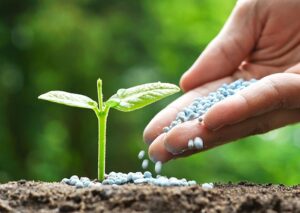
The findings of the research, funded by the United States Agency for International Development (USAID), through the Feed the Future Enhancing Growth through Regional Agricultural Input Systems (EnGRAIS) project implemented by IFDC, when explored and the potential harnessed, will decrease the continent’s dependency on fertilizer from global north.
Already, countries in the West Africa region, including Burkina Faso, Ghana, Mali, Niger, Senegal, and Togo, have substantial rock phosphate deposits that can be harnessed to increase agricultural productivity, propel food security and reduce poverty.
Dr Ekwe Dossa, the Director of Soil Health and Agricultural Productivity at IFDC, who shared the findings at a virtual meeting, said most of the phosphate mined in those countries were either exported in raw form or processed into phosphoric acid and then sold outside the region.
“Biomass and grain yield results showed that phosphite availability from the phosphate rock was enhanced by activation with a modest quantity of water-soluble phosphate.
“The results are variable and site-specific, an evidence of other factors interacting in determining agronomic efficiency of RPs.”
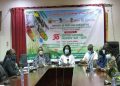
The meeting was to share information with the region’s fertilizer industry players about innovative technologies that can enhance production capacity and discuss the research results as a platform for industry players to share experiences and support ongoing research.
Dr Dossa said the study revealed that rock phosphate blended with other ingredients enhanced root growth and resulted in good yield.
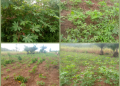
He said trials conducted in northern Ghana and Niger showed effectiveness, explaining that yields of maize, cowpea, potatoes and soybean put under cultivation increased by more than half.
“It has shown that if farmers want to continue to farm on a particular piece of land, rock phosphate and its activating ingredients can help agronomic efficiency,” he said.
Dr Dossa urged political leaders to take the necessary steps to harness the rock phosphate in the sub region to boost food production and reduce costs incurred in importing fertilizer.
He disclosed that the general condition of soils in sub-Saharan Africa was poor and that intense rains fuelled leaching of the available nutrients leading to low acidity.
“We are growing food using the available fertility in the soil but farmers are unable to replenish the soil taken by the crops. Rock phosphate can contribute to soil fertility.
Dr Sansan Youl, Chief of Party of the Feed the Future EnGRAIS project, stated that the rock phosphate research was in sync with the EnGRAIS project’s aim of meeting the food demand of the growing population in the sub-region.
He noted that fertilizer and soil health had become a priority on the agenda of political leaders of West Africa and the Sahel.
“Following the signing of the Lome declaration and action plan on fertilizer and soil health, which aligns with the Nairobi Declaration, there is clear and strong political consensus in favour of increasing local production and use of fertilizer,” Dr Youl said.
The average fertilizer usage in Africa has seen a rise from 8.0 Kg/Ha in 2006 to a peak of 42.5 Kg/Ha in 2019, followed by a downward trend to settle at 34.5 Kg/Ha in 2022 amid the recent fertilizer crisis resulting in rising prices and limited availability.
The Feed the Future EnGRAIS project is an 8-year initiative funded by USAID, focusimg on increasing food production and food security in West Africa.
Through an analysis of the critical challenges and issues impacting sustainable agricultural productivity at the ECOWAS regional level, IFDC and its partners have identified four key workstreams necessary to meet the Strategic Objective of EnGRAIS to sustainably increase regional availability and use of appropriate and affordable fertilizers by smallholder farmers, with a special focus on women and youth.
As part of its ongoing efforts, the EnGRAIS project seeks to provide the West African private fertilizer sector with the latest information on manufacturing options and recent industry and research developments aligning with the ECOWAS Fertilizer and Soil Health Roadmap.
Source: GNA