Transforming our agrifood systems to make them more efficient, inclusive, resilient, and sustainable is key to addressing the triple planetary crisis of climate change, biodiversity loss, and pollution. Such a transformation requires greater cooperation between the public and private sectors, empowering agrifood systems stakeholders, adopting holistic cross-sectoral approaches, and working together to optimize multilateral environmental agreements.
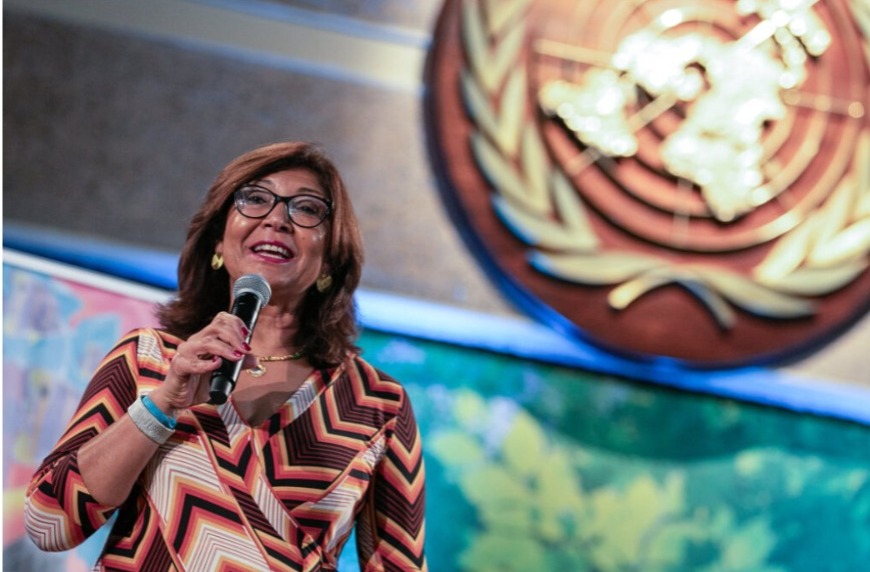
This was the overarching message from the Deputy Director-General of the Food and Agriculture Organization of the United Nations (FAO), Maria Helena Semedo, in a series of events organized this week in Nairobi during the sixth session of the United Nations Environment Assembly (UNEA) and the Second Quadripartite Executive Annual Meeting.
On Tuesday, Semedo focused on ecosystem restoration at an award ceremony recognizing seven new World Restoration Flagships under the UN Decade on Ecosystem Restoration.
The Decade, co-led by FAO and the UN Environment Programme (UNEP), recognizes the best or most promising examples of ecosystem restoration from around the world.
Noting that the ceremony is about hope and making the possible happen, Semedo said the initiatives are “shining examples of how to reverse ecosystem degradation by restoring, reviving, rewilding, conserving and innovating.”
The role of the private sector
On Wednesday, Semedo turned to the crucial role of the private sector during a Business & Industry Major Group (BIMG) High-level dinner at UNEP’s Nairobi headquarters.
Part of the sixth session of the UNEA, the dinner brought together leaders from the private sector, government, UN agencies and other organizations, as well as the President of the UN General Assembly, to discuss how businesses can contribute to the theme of “Effective, inclusive and sustainable multilateral actions to tackle climate change, biodiversity loss and pollution.”
Recognizing that stronger collaboration with the private sector could help accelerate innovation and better respond to the current planetary challenges, Semedo emphasized solutions and opportunities FAO can offer to assist private sector actors in developing and prioritizing business strategies that integrate and promote sustainable agrifood practices, climate action and social responsibility principles.
In their exchange, the private sector recognized the valuable cooperation with FAO to help generate better geospatial and quality data, for example on the use of fertilizers, to promote healthy soils, and curb food waste.
Land degradation, climate and biodiversity
On Thursday, Semedo took part in a UNEA high-level side event exploring the impact of land degradation and desertification on food security, especially in the context of the three so-called Rio Conventions (on Climate, on Desertification and on Biodiversity) – all with key Conferences over the year.
Semedo noted that climate change, biodiversity loss, land degradation, and drought often occur simultaneously and usually impact the most vulnerable communities the most.
In her intervention, she highlighted the role that agrifood systems can play in addressing such challenges through the climate-biodiversity-land-food-water nexus. She applauded Africa’s Great Green Wall, an ambitious transformative initiative focusing on restoring land and turning it fertile, while contributing to climate action, biodiversity conservation, food security and livelihoods.
Highlighting the potential to leverage existing resolutions, codes and standards, the Deputy Director-General remarked, “It is only through better coherence, synergies and coordination among all multilateral environmental agreements and relevant international organizations, such as FAO, that we can accelerate the implementation of the Paris Agreement and the Global Biodiversity Framework while delivering on the Sustainable Development Goals.”
Moreover, addressing the nexus can increase the impacts of scarce financial resources, thereby helping deliver on commitments on the ground, Semedo said.
The Deputy Director-General also participated in a high-level meeting of the Quadripartite – FAO, United Nations Environment Programme (UNEP), World Health Organization (WHO) and the World Organisation for Animal Health (WOAH) – showcasing the importance of bridging multiple mandates through an inter-sectoral approach such as One Health.
The meeting discussed achievements over the past year and reaffirmed the organization’s commitment to further sustain One Health implementation at all levels with greater resource mobilization and political will.
In this regard, a dinner between the Quadripartite, the current and next Presidencies of the G20 (Brazil and South Africa), the current and next Presidencies of the G7 (Italy and Canada) discussed ways to ensure that One Health remains high on the international agenda.
Multilateralism
Semedo’s final engagement in Nairobi saw her address a UNEA leadership dialogue on environmental multilateralism on Friday.
FAO already hosts and leads over a dozen multilateral instruments on issues related to the environment, pollution, plant health and food safety, such as the Commission on Genetic Resources, the International Plant Protection Convention, the Rotterdam Convention, the Codex Alimentarius, as well as normative products such as Code of Conducts on Pesticides, Fertilizers, and responsible fisheries.
According to Semedo, successful environmental multilateralism calls for five key elements: Empowering agrifood systems stakeholders – including women, youth, smallholder farmers, and Indigenous Peoples; investing in actions that simultaneously address environmental issues, improve food security and nutrition and offer socio-economic equity; strengthening the dialogue between state and non-state actors to build ownership of collective actions; policy coherence at national, regional and international levels, especially in environment, agriculture, trade and fiscal policy; and financially-backed environmental agreements that generate alternatives, build country capacities and allow concerned sectors to transition to more sustainable models.
Meeting with the Presidencies of the three upcoming UN COPs – Saudi Arabia on desertification, Colombia on biodiversity and Azerbaijan on climate – the Deputy Director-General underlined FAO’s support to bring food systems transformation as a common element across the three meetings.
Source:FAO