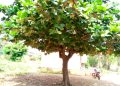
Moringa oleifera, called nebedaye in Senegal, is considered a “miracle” tree that helps address food insecurity and major environmental problems. Because of its many virtues for health and well-being, it is also nicknamed “the tree of life.” Originally from India, moringa is one of the new crops that is improving the lives of Senegalese farmers.
Moringa is popular in the Kolda and Ziguinchor regions of Senegal, where farmers produce and process several parts of the moringa tree, either individually or in groups.
Falimatou Mbalo is a member of an economic and commercial group called Dieynaba Djigo in the Kolda region’s Vélingara commune. Her group received training on processing moringa. Since then, the young mother’s life and that of her children has improved. Mrs. Mbalo says: “The knowledge I have acquired about the nebedaye helps me a lot. Now, every morning, I give nebedaye syrup to my children before they go to school. And I have noticed real improvement in their health and well-being.”
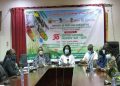
Two months ago, women in the Dieynaba Djigo group and five other groups in Vélingara were trained on techniques for processing moringa into syrup. Since then, the women have met every Saturday to make moringa syrup. Meeting regularly enables them to improve their skills and earn money.
Mrs. Mbalo explains the process of making nebedaye syrup. First, the women place a good amount of fresh leaves in a container. They wash the leaves twice with a bleach solution to kill germs. Then they soak them in plain water before removing and draining them. Next, they place the leaves in well-cleaned and disinfected mortars and pound them until the leaves turn into a paste.
To make six litres of syrup, they need three kilograms of nebedaye paste. The women boil the appropriate amount of water and pour it over the paste, letting it soften for 15 minutes before stirring the mixture. Then they filter it through a sterilized piece of thin cloth. After filtering, they pour the mixture into a pot and place it over a fire. After adding a kilogram and a half of sugar, they beat the mixture with a whisk. Then they add a glass and a half of lemon juice and continue to beat. Cooking takes about 15 minutes. Finally, the women filter the mixture and let it cool before pouring it into bottles.
This manual procedure is only suitable for small quantities of syrup. The women do not have the means to sell their syrup in large quantities. But they are organizing themselves to gradually expand their business.
Mariama Boireau is a health facilitator and supervisor of the 60 or so women who meet every Saturday to make syrup. She says: “We have a fund where we save money every week. After each session, we give a bottle of syrup to each [group] for 1,500 FCFA ($2.72 US). After the syrup is sold, the group can make a profit of 3,500 FCFA ($6.34 US), which we put in the savings bank. Along with the rest of the women, we buy new products and equipment to expand our business. These savings also allow us to have a communal fund for internal loans.”
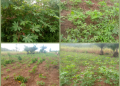
Abdou Fata Gueye is the president of FIMOSEN (The Moringa Sector of Senegal), a private company. This entrepreneur delivers products derived from moringa throughout Senegal and outside the country. Mr. Gueye cultivates a one-hectare moringa field in Kolda and produces leaves and seeds. He explains: “The leaves and the seeds have two different cultivation techniques. If the goal is to produce leaves, there is what is called intensive cultivation. In this case, the trees are separated by only 50 centimetres. The goal is to grow plants no higher than one metre that produce many more leaves.”
Mr. Gueye says the technique is different for seeds: “In this case, the goal is to have large trees of four or five metres (high) before you harvest the seeds. So when planting, it is necessary to space the trees two or two-and-a-half metres apart.”
While moringa leaves are used to make syrup, juice, and powder, the seeds are used to make oil. In all these forms, the plant improves health and well-being. Mixed with cereal, moringa helps fight malnutrition in children. Moringa contains protein, calcium, potassium, and iron, while moringa leaves are also packed with vitamins A, B, and C.
Source: Farm Radio International
(This resource is undertaken with the financial support of the Government of Canada provided through Global Affairs Canada.)