A decade ago, vertical farming was seen as the future of agriculture. Investors poured billions into indoor farms and new technologies with the hopes of producing food more efficiently and with fewer resources and environmental consequences.
It hasn’t worked out that way, as a recent report from The New York Times detailed.
Nevertheless, there are a number of vertical farms thriving in Wisconsin. Robert Carlson started Grow Space Vertical Farms in Kenosha with his family about three years ago.
The farm sells a variety of leafy greens, microgreens and herbs directly to individuals and restaurants. Carlson told “Wisconsin Today” that they’ve learned from the mistakes of vertical farms that have failed.
“We are really lucky, because we got to watch all those big vertical farms fail,” Carlson said. “We started in the past three years. So we noticed, ‘OK, this is what they’re doing wrong. Here’s what we’re going to do right now that we can see exactly what doesn’t work.’”
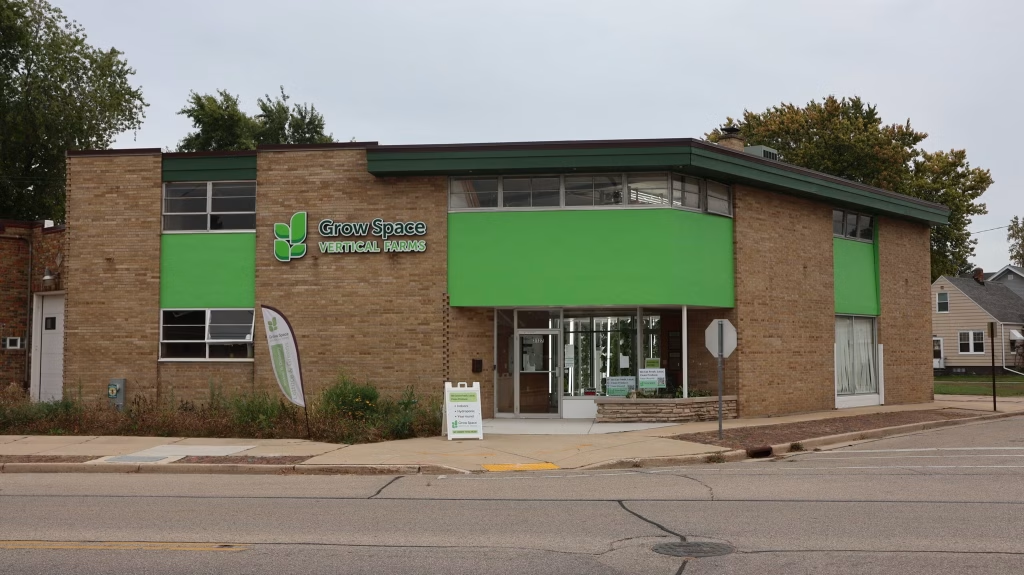
Carlson started tinkering around growing food in their basement “and it kind of snowballed from there.” The family then converted an old furniture store into a full-scale farm operation.
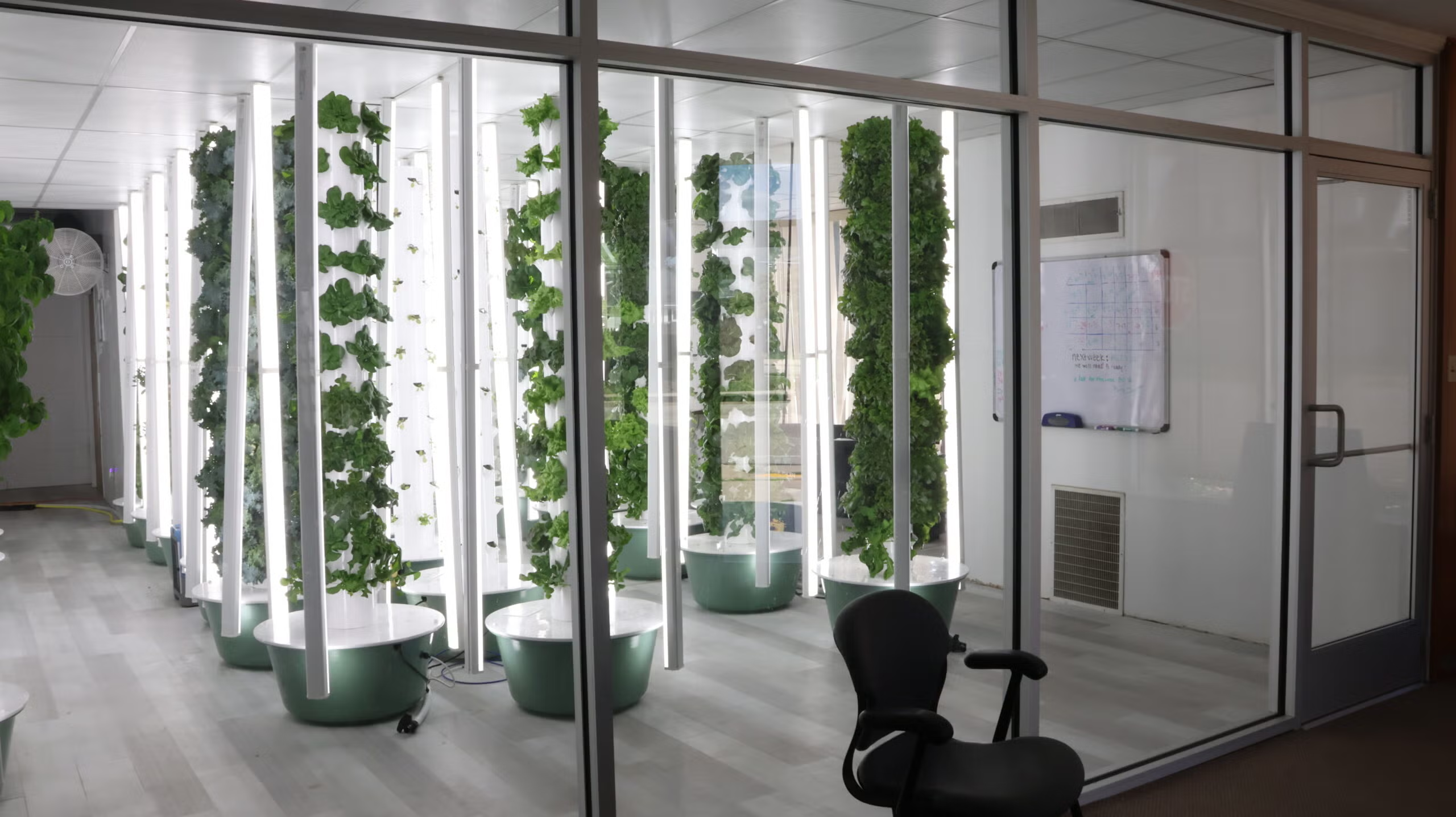
Johanna Oosterwyk is the manager of the D.C. Smith Instructional Greenhouse at the University of Wisconsin-Madison, where she teaches classes in greenhouse management and plant care. She explained that vertical farms involve growing food on trays that are stacked, to make better use of space.
“Every layer has associated lights with it,” she explained. “So instead of using sunlight, they’re using electrical energy to create the photons that drive photosynthesis.”
Large vertical farms failed for many reasons, Oosterwyk said. Many owners misunderstood the energy requirements needed for growing plants. While traditional farmers use free sunlight, vertical farms have to pay for electricity to power their lights. And turning buildings into farms created unforeseen engineering challenges.
“You’ve got the plants growing in … nutrient rich water, not in a potting mix or soil, and all of those plants are transpiring. They’re moving that water through the roots into the plant and out the leaves, and it ends up in the air,” she said. “So you end up with a building with really high relative humidity, and you may not have thought ahead about providing sufficient ventilation. And also, a lot of these old buildings are made out of steel, and steel, when it gets exposed to water, rusts.”
Carlson said his family had to do a number of things to the old furniture store to make it suitable for a farm, including replacing a drop ceiling and waterproofing the building. But improvements in LED lighting have made it economically possible to provide the light needed, he said. Since it’s indoors, the farm can grow food without pesticides and herbicides and it recycles more than 90 percent of the water it uses.
Although the farm’s produce is more expensive than what people can buy in a grocery store, Carlson said it’s much fresher.
“That’s what everybody absolutely loves,” he said. “The greens are two weeks fresher than they can get from the store. Plus they have the roots still attached, because they’re not in soil. That makes the plants last quite a bit longer.”
Leafy greens producers like Grow Space have been an exception in the industry that has largely struggled to take off, Oosterwyk said. Greens grow quickly and need less light to grow than other vegetables and don’t need pollination. And, they’re better when fresh, so vertical farms growing leafy greens have an advantage over traditional farms that are shipping across the country.
By locating these farms in urban areas, they can also take advantage of a regular labor supply.
“It’s an opportunity for employment, particularly year-round employment,” Oosterwyk said. “Many farms are seasonal. So you have a lot of work to do during the harvesting and during the planting season, but maybe you have four
months of winter when you don’t have work for folks. So a benefit to an indoor farm would be consistent year round employment.”
Source: www.wpr.org