Fisherfolks in the Central Region have backed the annual fishing closed season aimed at replenishing the constantly depleting fish stock to ensure the sustainability of the marine resources and long-term viability of the sector.
According to preliminary findings of an ongoing research project by the University of St Andrews in Scotland, the fishers have agreed, in the interest of sustainability, that the sea should be closed to fishing every year.
However, they have taken a strong stance against the period of implementation, insisting that the season must coincide with the “natural closed season” experienced in June where there were very little activities on the sea.
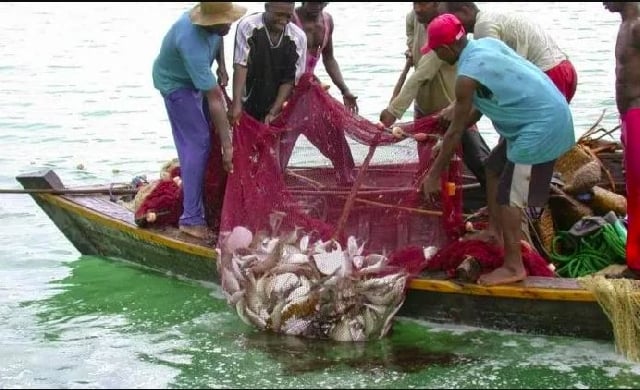
They also called for economic assistance in various forms including soft loans and other relief packages as the season was usually characterised by severe economic hardships which affected women disproportionately.
This is despite government’s exclusion of artisanal fishers from observing the closed season from 2025.
Led by Dr Ifesinachi Okafor-Yarwood, the researchers of the “Sankofa Project” shared the highlights of the data collected at a validation stakeholder engagement in Cape Coast to conclude the Central Region phase of the project.
Titled “Creating Synergies between Indigenous Practices and Scientific Knowledge (ISIPSK),” the Sankofa project seeks to investigate the gendered socio-economic effects of the fisheries closure in four coastal regions of Ghana to understand how the policy affects communities.
Largely, it focuses on equitable, inclusive and sustainable fisheries management in Ghana.
The project is funded by the PEW Fellows Program in Marine Conservation and supported locally by the Fisheries Commission of Ghana, the Fisheries Committee for West Central Gulf of Guinea (FCWC), and the Canoe and Fishing Gear Owners Association of Ghana (CaFGOAG).
The researchers engaged the stakeholders to confirm their views and suggestions from earlier engagements comprehensively captured without mischaracterisation.
The meeting provided a platform for the fishers to verify the data, reflect on the results, and share experiences to shape recommendations for policy formulation and implementation.
The project highlighted the gendered socio-economic impacts perceived among fisherfolks arising from the implementation of conservation policies to rebuild depleting fish stocks, with a specific focus on Ghana’s fishing closed season.
The fisherfolks, according to the data gathered, urged government to review the period of the fishing closed season, suggesting June as an ideal period.
During that period, the fishers would be receptive to financial support during the closed season such as financial relief packages from government, low interest loans from banks, and supplementary livelihood avenues from CSOs and government.
Additionally, they entreated authorities to enforce all fishing regulations, and address plastic and mining-related pollutions in the marine space.
Leaders of the fishers cautioned their people to end the destructive illegal-unregulated-unreported (IUU) fishing practices such as harvesting of juvenile fish, light fishing, the use of explosives, and the use of chemicals.
For the women, they wanted a strict enforcement of the traditional fishing holidays observed on Tuesdays and Sundays in the various communities, the data captured.
Participants at the validation meeting corroborated the data, indicating that it mirrored the realities of declining catches and debilitating impact of the annual closed season.
They commended the Sankofa Project team for returning to share the findings with them, providing and seeking feedback, and stressing the need for participatory approaches in research.
They indicated that such research findings were hardly shared with them at the community and grassroots level.
Dr Ifesinachi Okafor-Yarwood, lead researcher of the Sankofa project, presented insights on respondents’ demographics, concerns about the closed season, its impacts, and ways to improve acceptance.
She emphasised that grounding research in local knowledge made findings more credible for both community action and policy dialogue.
Professor Joseph Aggrey- Fynn, Professor in Fisheries at the University of Cape Coast, reiterating the importance of the closed season, dissented from the suggestions of the fisherfolks, maintaining that the best period was July-August which was the biological peak period for fishes.
Prof Aggrey-Fynn entreated fishers to practice responsible fishing and co-management participation, adopt good financial management and practise dependable saving habits.
Speakers from civil society organisations in the fisheries sector and maritime regulators underscored the importance of research, safety at sea, and tackling pollution.
Nana Kweigya, the National President of CaFGOAG, thanked all stakeholders and encouraged fishers to dedicate time to fisheries governance processes.
He announced that validation engagements would also be carried out in the Greater Accra and Volta Regions.
Source: Access Agric