By Linda Dede Nyanya Godji Incoom
The early morning sun was already beating down as Nana Ama Kakra Amoah removed her Personal Protective Equipment (PPE) and stepped out of her greenhouse farm at the Dawhenya Greenhouse Enclave to catch some fresh air. It was only 10:30 a.m., but the heat within the plastic-covered structure had forced her and her assistant to go on break.
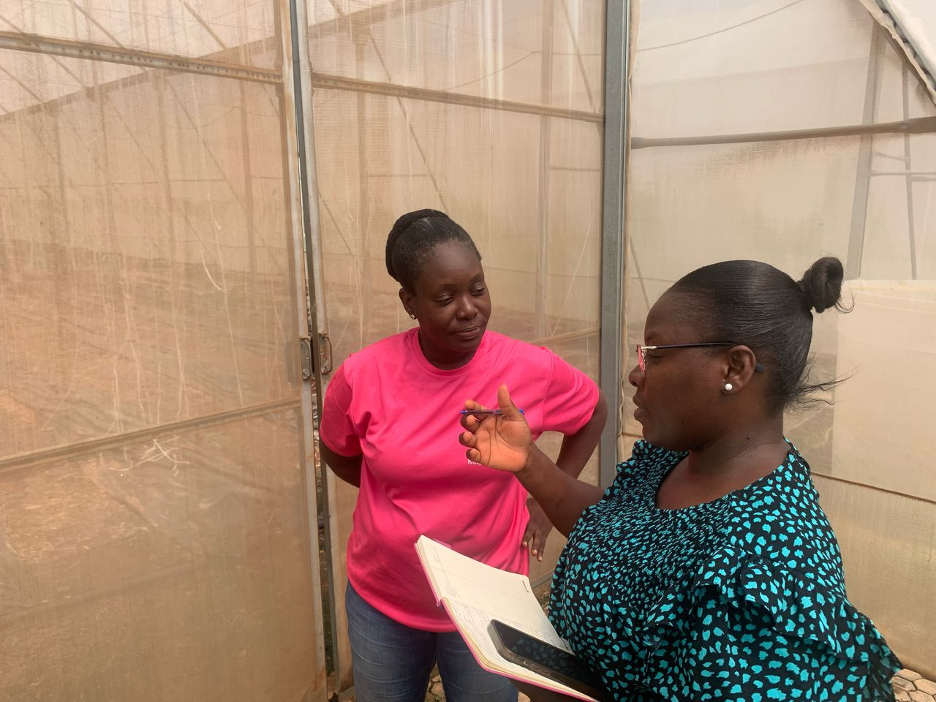
“During the dry season, when the weather is very hot, we have no choice but to close early. You cannot stand the temperature inside.” Ama said. This experience is not isolated, as similar conditions are reported across Ghana’s expanding greenhouse farms, particularly the plastic structures introduced earlier into the country.
A Growing Industry with Growing Concerns
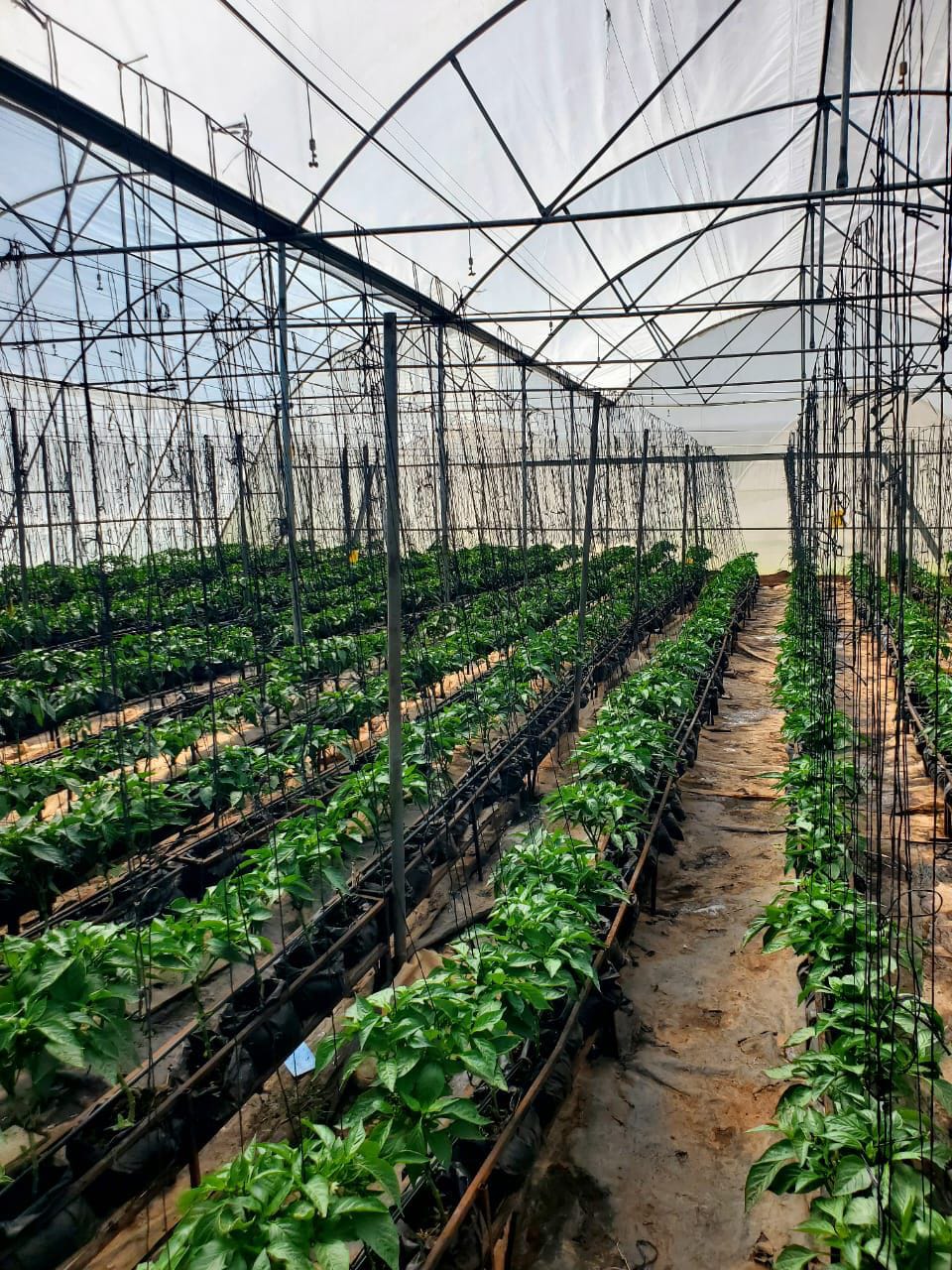
Ghana’s greenhouse farming sector, often referred to as ‘green gold’, has seen notable growth in recent years, driven by the potential for higher yields and all-year-round production. According to the Ghana Irrigation Development Authority (GIDA), greenhouse farms can increase vegetable yields by 25% to 100%, with some achieving up to 80 tons of tomatoes per hectare, compared to 20 tons in open-field conditions.
Greenhouse technology is widely viewed as an important tool to improve food security, reduce pesticide use, and stabilize agricultural supply. Despite these benefits, there are some concerns emerging about the sustainability of worker conditions, particularly regarding extreme heat and chemical exposure in the enclosed farming conditions. Ama explains that though she has not experienced any health issues apart from the severe heat, some colleague farmers have reportedly fainted while working.
Chemical Exposure Concerns
Chemical safety remains another concern. A study titled “Occupational Exposure to Pesticides and Associated Health Effects Among Greenhouse Farm Workers” by Patrick Amoatey et al. highlighted increased risks of respiratory and skin conditions in such environments.
In an interview, a Scientific Researcher and Vegetable breeder at the Center for Scientific and Industrial Research (CSIR), Dr. Michael Kwabena Osei of CSIR called for more localized research to validate these findings in the Ghanaian context. He however agrees that the prolonged exposure to heat and pesticide residues can lead to some health issues like the heat and skin irritations.
“What I’m trying to say is, nobody set an agenda to go and look at the health risk. We go about doing our normal research, and then we noticed that some of our staff do experience some of these. And so, we haven’t researched the health concerns.” Dr. Osei added.
A Senior Lecturer and a Greenhouse expert from the Kwame Nkrumah University of Science and Technology (KNUST), Dr. Eli Afetsi Gaveh, states that greenhouse farming technology is one of the ways by which we can significantly reduce pesticide and chemical use. “If greenhouse workers follow the guidelines and follow good management practices, there will be no health implications to record” Dr. Gaveh added.
Success Stories and Safety Measures
Some Greenhouse farms have set exemplary standards in safety compliance. At Agri Commercial Services Limited in Wenchi, Managing Director Mr. Kwabena Adu Gyamfi enforces strict PPE use and safety protocols. “Our supervisors ensure full compliance. Non-adherence results in salary deductions. That’s how seriously we take it,” he stated.

These policies have paid off; no health-related incidents have been recorded at his facility. Regular training, strict discipline, and investment in automated chemical spraying and irrigation systems have made greenhouse work safer and more efficient.
The Agri Impact Limited Greenhouse enclave at Dawhenya, one of the largest Greenhouse enclaves in the country, has similarly invested in advanced technologies, including net shading systems within the plastic greenhouse structures. They have also introduced the latest complete net greenhouse structures to reduce temperatures, along with an automated chemical application system. These steps are improving worker comfort and productivity. These adaptations, though expensive, demonstrate how infrastructure and design significantly influence working conditions.
Temperatures in Ghanaian greenhouses can reach 35 to 40°C, and in poorly designed structures or hotter regions like the North, they may exceed 40°C, creating uncomfortable conditions that force workers to take frequent breaks.
Elsewhere, a study in the Journal of Arid Environments notes that greenhouse temperatures in the Negev can exceed 45°C during summer without proper ventilation, making cooling systems essential for both crops and worker comfort.
It is for this reason that both Dr. Gaveh and Dr. Osei emphasised the need to follow standard guidelines: “Tropical greenhouses require at least 20% of the floor area to be open for ventilation. Without this, you risk high humidity and temperatures.” Dr. Gaveh.
The Economics of Safety
The greenhouse sector in Ghana is largely targeted at premium markets, where crops can sell for as much as five times the price of open-field produce. This economic advantage has enabled many facilities to reinvest in safety systems, training, and innovation.
According to GIDA, greenhouse-grown crops include tomatoes, cherry tomatoes, bell peppers, Mediterranean cucumber, habanero peppers, lettuce, and orange-flesh melon, all with significantly higher yields than traditional methods. However, these gains come at a cost. Adopting newer technologies to address heat and discomfort requires significant capital. This is a major barrier for smaller greenhouse owners like Nana Ama.
Calls for Regulation and Research
While interest in greenhouse farming continues to grow, experts warn that Ghana lacks clear regulations tailored to tropical greenhouse farming. Most existing standards are borrowed from temperate regions, which have different climatic and operational needs.
“We need to design our greenhouse systems specifically for tropical environments like Ghana,” says Mr. Michael Adu Gyamfi. Dr. Michael Kwabena Osei also called for more Ghana-specific studies on occupational health impacts, so we can properly assess the long-term effects of working under these conditions.
The Way Forward
Greenhouse farming holds vast potential for transforming Ghana’s agricultural landscape. Its ability to boost yields, conserve land, and support year-round food production makes it an attractive solution to food insecurity.
Yet its success depends not only on productivity but on how well the system safeguards its workforce. Addressing heat, chemical exposure, and cost barriers is crucial to building a sustainable and inclusive greenhouse industry.
As Ghana’s greenhouse industry scales up, its growth must be matched with robust safety frameworks, localized research, and infrastructure that adapts to the country’s climate realities. Only then can the promise of farming under cover be fully realized, for crops, for farmers, and for Ghana’s future food security.
–END–
This story was produced with support from the British High Commission’s Science Journalism Initiative and the KNUST Responsible AI (RAIL) Department, exploring the intersection of agriculture, technology, and public health in Ghana.