By: Linda Dede Nyanya Godji Incoom
Plastics have become a convenient part of daily life for many Ghanaians, widely used and synonymous with packaging, from the sachet water that quenches thirst under the scorching Accra sun to the sturdy bags carrying groceries home from bustling markets. Since plastics gained popularity in Ghana, they have provided many packaging solutions; however, their mismanagement has led to serious environmental and health problems.
The Growing crisis in Ghana and efforts at addressing waste plastics menace
Like many developing countries, Ghana generates vast amounts of plastic waste—over one million tonnes annually—though local production accounts for just 52,000 tonnes, with most plastics coming from untracked imports, according to the National Plastics Management Policy (2020). Globally, plastic production surged from 1.5 million metric tonnes in 1950 to 400 million in 2017, with only 9% ever recycled. These plastics persist for centuries, polluting everywhere, increasingly in our gutters, soils, water bodies, and food systems and even pile up in landfills. According to the United Nations, an estimated 400 million tons of plastic waste are produced yearly, with 32 percent escaping collection systems. Millions of tons eventually make their way into the ocean annually.
In recent years, Ghana enforced a ban on single-use plastic bags in the fight against plastic pollution. However, the ban alone is not enough to address the full scale of the problem. Lasting impact will require the introduction and widespread adoption of safe, scientifically proven biodegradable technologies across the plastic value chain, from production to disposal.
Harnessing innovation and technology
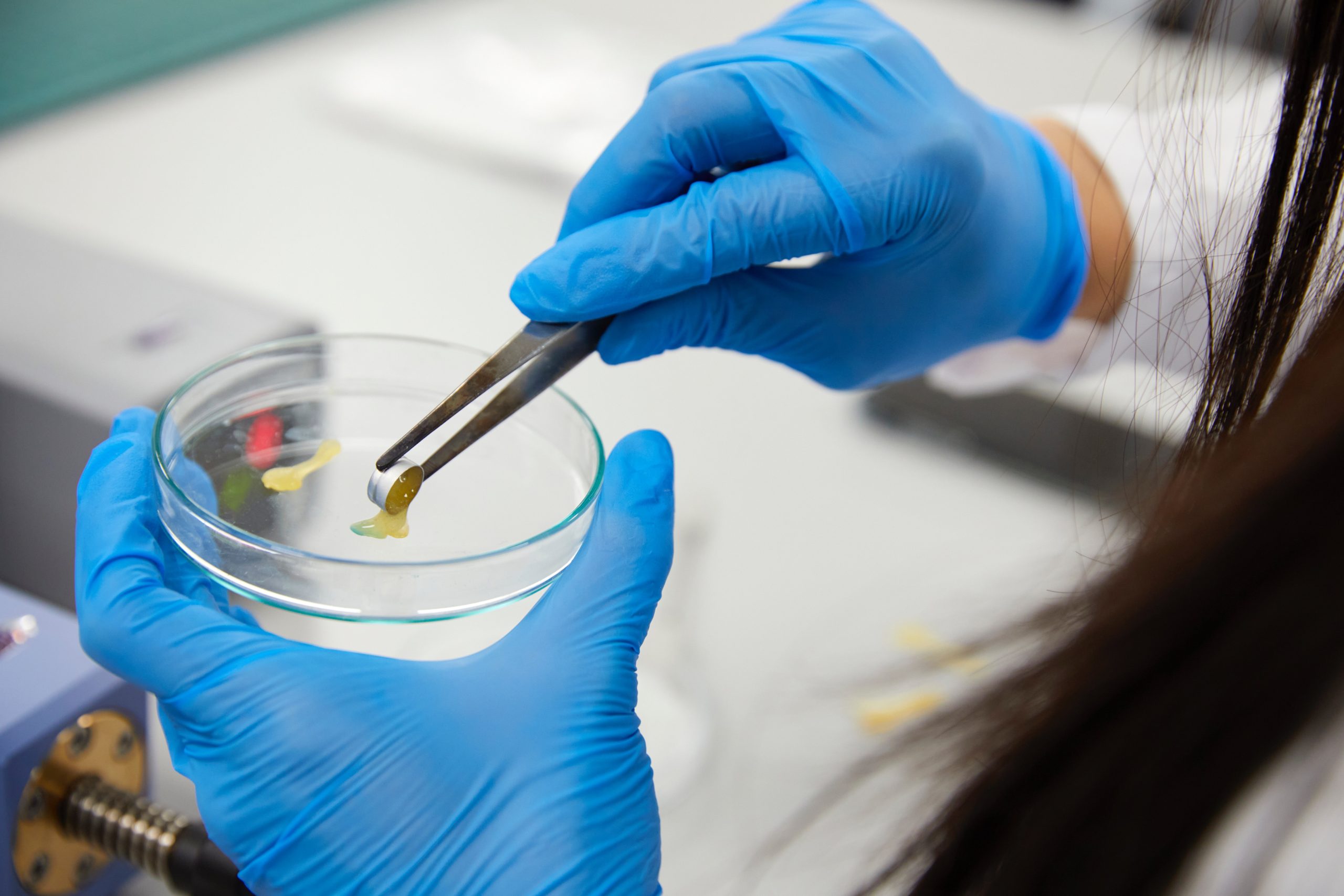
Amidst this ongoing battle against plastic waste, a promising innovation has emerged from the hallowed halls of Imperial College London. Polymateria, a dynamic scale-up start-up within the university’s innovation hub, has engineered the world’s first biotransformation (self-destructing plastic) technology that could revolutionize how we view plastic at its end-of-life.

Biotransformation technology makes plastics fully biodegradable while remaining compatible with recycling. Unlike older biodegradable technologies that fragment into harmful microplastics, this technology enables plastic to transform into a harmless wax-like substance when exposed to sunlight, air, moisture, and heat fully biodegrading within two years without leaving toxins or microplastics behind. This makes it particularly suitable for countries like Ghana, where unmanaged plastic waste poses a major environmental challenge and recycling infrastructure is still evolving.
Throwing more light on the technology’s suitability for countries like Ghana, the Chief Corporate Affairs Officer at Polymateria, Steven Altmann-Richer, says the biggest strength of this technology is how well it works in everyday settings, especially in countries without advanced waste systems, without needing factories to change how they make plastics. This means it can be adopted easily and affordably.

“Polymateria’s Biotransformation technology can tackle the problem of plastic pollution today, targeting those items that are particularly prone to pollution such as straws, bags and water sachets.” Altmann-Richer added
He also explained that the “self-destructing plastic,” technology could make a real difference in protecting the environment and public health. “Globally, about 32% of plastic packaging is never collected and ends up as litter. Since 80% of ocean plastics come from land-based waste, Polymateria’s solution will fully biodegrade common plastic items, from bags to straws to water sachets. The process happens within 2 years, and no microplastics or toxic substances are left. The technology also enables plastic to remain compatible with conventional recycling systems as scale where those are available.” He added
The way forward in Ghana
According to the Ghana Standards Authority (GSA), Ghana currently operates the GS 1183:2018 standard, which provides plastics producers with the specification for Conformity Assessment Protocol for Oxo-Biodegradable Additives (OBD), Masterbatches, and plastic products made of Polyethylene (Linear Low Density Polyethylene (LLDPE), Low Density Polyethylene (LDPE) and High Density Polyethylene (HDPE) and Polypropylene (PP).
The Head of the Polymer Laboratory at the Ghana Standards Authority (GSA), Mr. Samuel Agyapong Danquah, says as part of Ghana’s continuous commitment to the Global Plastic Action Partnership (GPAP), new standards for recyclable PET were developed last year (2024) to advance sustainable use of plastics.
Mr. Agyapong Danquah, says GSA has been actively monitoring the evolution of biodegradable plastic technologies and integrating a collaborative stakeholder problem-solving approach to the plastic menace. He added that the GSA would be open to collaborating with Imperial College, especially in areas like capacity building and knowledge exchange around Polymateria’s self-destructing plastic technology known as Biotransformation.
Responding to inquiries about whether Polymateria’s technology relied on oxo-biodegradable additives, an approach introduced in Ghana but was criticised for fragmenting into harmful microplastics, Mr. Steven Altmann-Richer clarified that Polymateria’s solution is fundamentally different. “What we produce is novel and different from anything that has come before,” he said.
Mr. Altmann-Richer acknowledged the concerns associated with earlier technologies, noting that the emergence of new standards, such as the BSI PAS 9017 developed by the British Standards Institution, has helped distinguish scientifically robust innovations from legacy approaches.
“Polymateria’s technology has been shown through independent testing to meet the BSI PAS 9017. Products that meet this standard, or its equivalents, are rolled out using our technology across the world,” Mr. Altmann-Richer added.
Rev. Thomas Kwesi Abaidoo, President of the Institute of Packaging Ghana (IOPG), on his part stressed on the fact that Ghana must take packaging sustainability seriously. Plastics now make up over 60% of packaging in the country. Though cheap and versatile, their environmental impact is growing. “Plastics have served us well, but now they’ve become a nuisance,” he said,

He recalled that talks on biodegradable plastics began around 2016, with manufacturers and government agencies involved, and the Ghana Standards Authority started developing guidelines. But progress stalled due to the added cost. “The additives raised production costs by 5%. Manufacturers couldn’t pass that on to consumers, and since standards on oxobiodegradable weren’t mandatory, adoption was low,” he explained.
Rev. Abaidoo sees potential in Polymateria’s technology but insists on proper checks. “If it’s affordable and helps solve the waste problem, we’ll welcome it. But it must go through testing and certification by the Standards Authority,” he added.
Polymateria’s products, in commercial use since 2019, have successfully met this rigorous standard through independent testing and are already being implemented in various countries, including UK, Malaysia, and Taiwan Malaysia, the Philippines, Georgia, Uzbekistan, and Hungary. Crucially, the technology has been proven to be food-safe, heat-resistant, and suitable for long-term use.
“As the rollout of Polymateria’s technology continues to gather pace, Ghana is certainly a target market for the company. Ghana has been a leading light in Africa in terms of ambitions to tackle plastic pollution, being the first African nation to join the Global Plastic Action Partnership (GPAP). The government has regularly looked for bold and innovative ideas. While Ghana continues to develop its waste infrastructure, Polymateria’s technology can play a valuable role in tackling plastic pollution. It is available and ready to be deployed at scale.” Mr. Steven Altmann-Richer shared.
Conclusion
The journey toward safer environmental plastics begins with shared responsibility, which will require behavioural change, investment in recycling infrastructure, and strong governance. Adopting safe solutions like Polymateria’s technology, which meets international standards and leave no microplastics or toxic residues, aligns well with Ghana’s commitment to building a circular, inclusive, and sustainable plastic economy; one that protects the environment while unlocking socioeconomic opportunities.
-END-
This story was developed as part of a science communication initiative supported by the British High Commission (BHC), KNUST’s Responsible AI Lab (RAiL), and the Ministry of Science and Technology (MEST). The author is one of 10 journalists selected for advanced training at Imperial College London following a one-week intensive Science, Technology and Innovation (ST&I) Communication training in Accra