By: Abugri Amos
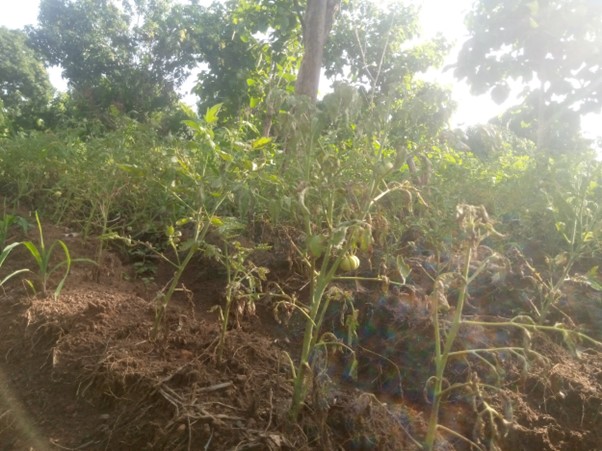
The majority of early seasonal-year tomato farming sessions, locally known as “major,” in Ashanti Akim Agogo Pataban and its environs, were destroyed due to inconsistent rainfall. Pre-information obtained on Friday, 10th May 2024, at the Agogo Market Square indicated the extent of the damage. As an environmental reporter, upon receiving the information, I made a discreet visit to the farms on the 11th and 12th of May 2024 and observed that the situation was very dire.
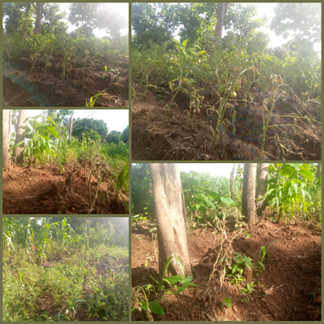
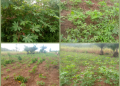
In an exclusive interview, the farmers disclosed that the tomatoes had reached their pollination stage when the rainfall stopped for a good three (3) weeks, which triggered the situation. Factually, in my observation and sampling, when you pick 10 farms, 3 are manageable, which are those who transplanted their nursery early. However, the remaining 7 farms are grossly out of hand, and the farmers have incurred great losses.
The tomato plants of those who transplanted late dried up as if they were intentionally sprayed with weedicide. For the early transplanted farms, there are stage 1 and 2 fruits on the trees, but they are unable to produce further, and the heat also forces the tomatoes to ripen prematurely.
Furthermore, I quizzed the farmers, “Do you still have interest in tomato farming?” They said the situation cannot discourage them from tomato farming because it happens every year. Final words from farmers at Booho state, “We are humbly appealing to the government and individual bodies to come to our aid by helping us with tomato seeds to enable us to engage in the mid-year farming session.” The mid-year farming session is locally called “Daaman.” In my research, I found out that the price of a bowl of tomato seeds has jumped from 150 Ghana Cedis to 200 Ghana Cedis within a period of less than one (1) week after the majority of the farms were destroyed.